Why have so many mass-produced foods become inedible?
There aren’t many subjects upon which most Americans agree these days. Everything, it seems, has become hyper-polarized. A new social media trend involves an interviewer guessing a stranger’s political affiliation based on their answers to non-political questions.
“Coffee or tea?”
“If milk, what kind?”
“What kind of car do you drive?”
Once upon a time, these questions — and their answers — would have been completely unremarkable and would in no way be construed as evidence of political affiliation. But now?
Remember when Tesla vandalism was a thing?
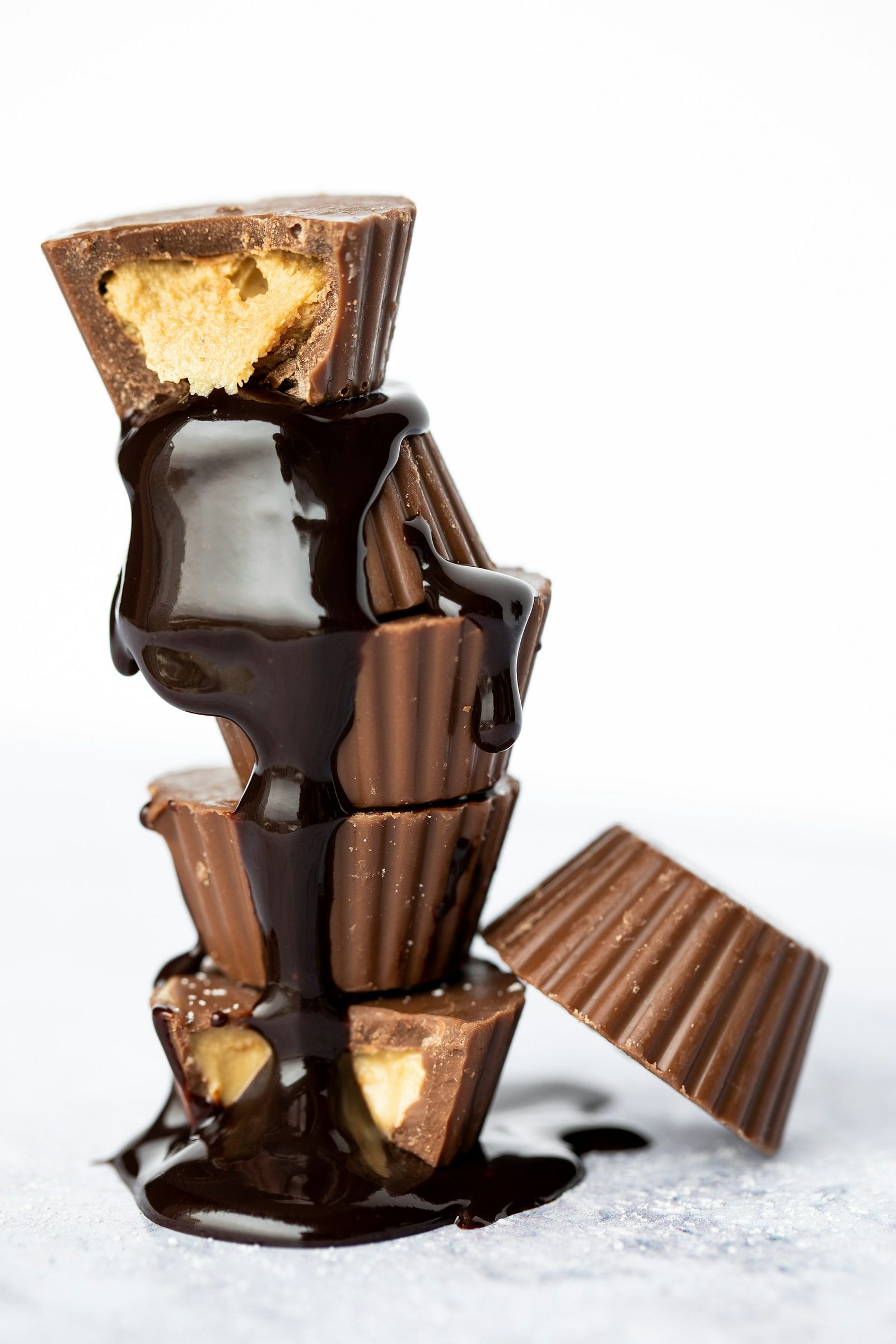
But Americans of all political persuasions can agree about one thing: Popular peanut butter cup brands aren’t what they once were.
So, too, any number of mass produced, highly-processed, corn-sugar laden foods. Guidance from health food experts have long urged shoppers to avoid all the aisles of the supermarket, buying only what is offered around the perimeters: Fresh produce, raw meat, dairy products, and whole grains.
Now, we can barely darken the door of a supermarket. We could throw a stone inside and hit a food-like substance made up entirely of chemical compounds we can’t pronounce.
Why have so many quintessential brands become inedible?
Brad Reese, grandson of Reese Peanut Butter cup genius, H.B. Reese, thinks he knows why. And how to fix it.
Writing “An Open Letter to Todd Scott, Manager, Corporate Brand & Editorial at The Hershey Company,” Mr. Reese the younger was unsparing.
“As someone who has spent his career shaping narratives, elevating reputations and stewarding brand meaning, you understand better than most that a story only works when it is anchored in truth,” began Mr. Reese, in a warm, flattering tone.
“That’s why I’m writing to you publicly today,” Reese wrote, noting the date was Valentine’s Day 2026.
“My grandfather, H.B. REESE (Who invented REESE’S) build REESE’S on a simple, enduring architecture: Milk Chocolate + Peanut Butter,” Brad Reese recalled. “Not a flavor idea. Not a marketing construct. A real, tangible product identity that consumers have trusted for a century.”
“But today, REESE’S identity is being rewritten, not by storytellers, but by formulation decisions that replace Milk Chocolate with compound coatings and Peanut Butter with peanut-butter style cremes across multiple REESE’S products,” bemoaned Reese.
“How does The Hershey Company continue to position REESE’S as its flagship brand, a symbol of trust, quality and leadership, while quietly replacing the very ingredients (Milk Chocolate + Peanut Butter) that built REESE’S trust in the first place?” he wondered. “This isn’t a supply chain question. It’s a brand governance question.”
“It’s about whether the Hershey Company’s corporate narrative is allowed to drift away from REESE’S product reality,” he wrote. “It’s about whether consumers are being asked to believe a story that no longer matches what’s inside the REESE’S orange wrapper.”
“It’s about whether REESE’S, the world’s №1 chocolate brand, is being protected or diluted,” Reese lamented.
“Right now, the REESE’S story is diverging from what’s inside REESE’S products,” he added. “And that divergence puts REESE’S and the legacy behind it, at risk.”
“As the grandson of the man who created REESE’S Peanut Butter Cups, I’m not asking for nostalgia,” Reese implored. “I’m asking for alignment. For truth in REESE’S brand stewardship. For a corporate narrative from The Hershey Company that reflects the REESE’S product consumers are actually receiving.”
“Because if REESE’S is going to remain the emotional equity anchor of The Hershey Company, then the story cannot be stronger than the ingredients,” he concluded.
“Todd you are uniquely positioned to bridge that gap,” begged Reese. “I hope you will.”
We should hope so, too.
Obviously, peanut butter cups and other candies aren’t likely to make the list of 12 great health foods. But perhaps, an occasional treat might be something to look forward to: As opposed to a chemical-laden frankenfood experience that doesn’t even taste all that great, for all the calories, sugar, and fat it contains.
30 years ago, an enterprising consultant suggested airlines cut one olive from the salads offered to first-class passengers. The passengers, it was argued at the time, wouldn’t even notice. And they probably didn’t. The resulting million-dollar savings became the stuff of industry legend.
Since then, the experiment has been replicated any number of times.
These days, salads don’t include any olives whatsoever — if there is a salad at all. Plus, the salads are now lacking a number of other tasty qualities as well. At some point, all of that compromising degrades the product.
And consumers, however over-burdened with choice calories, are sure to notice sooner or later.
(Contributing writer, Brooke Bell)